
Is your Tuxedo home a good candidate for basement development?
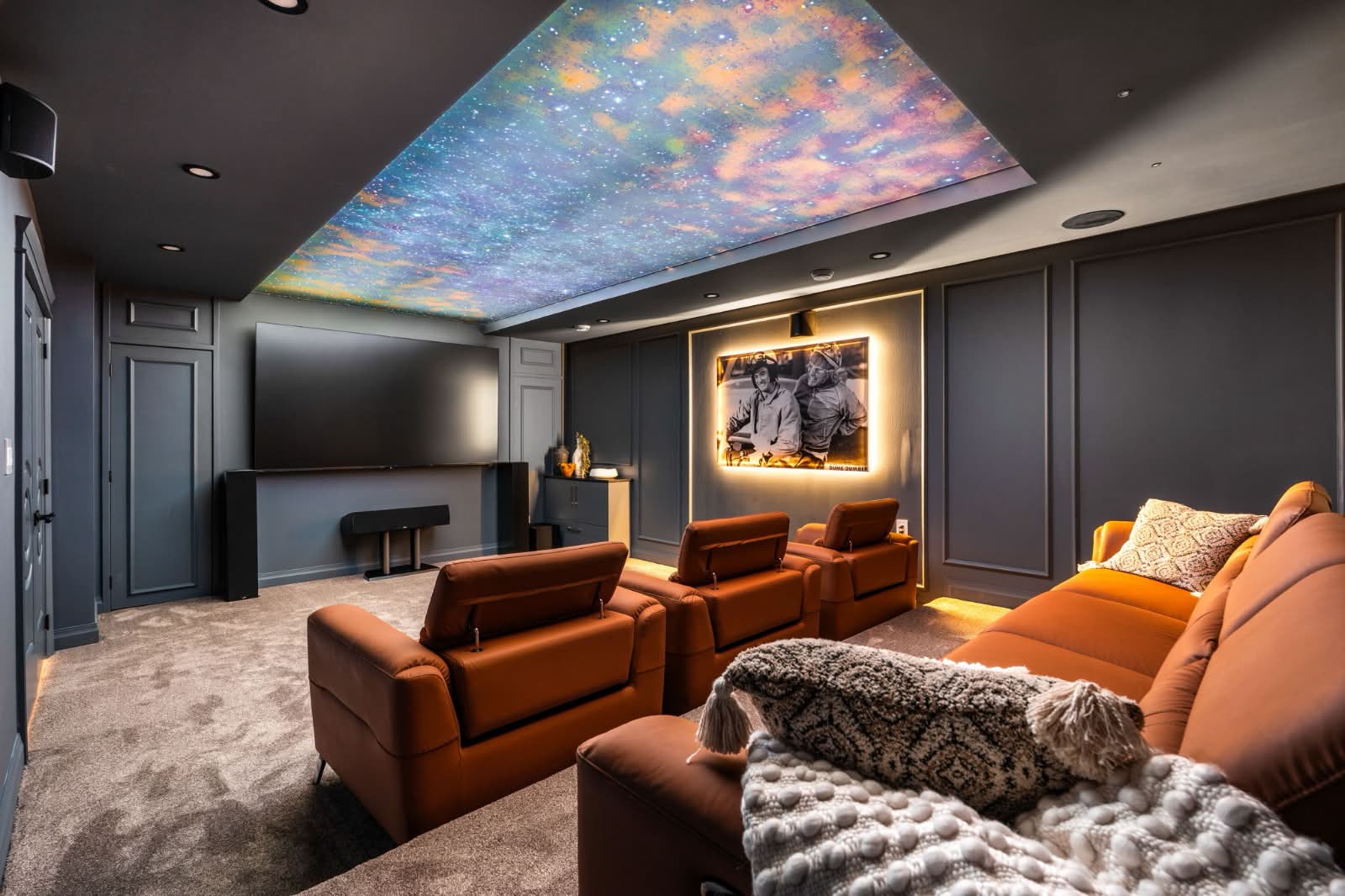
Not every home is a great candidate for every scope. Before committing to a basement development project in Tuxedo, a short feasibility review saves weeks of back-and-forth — and sometimes tells you to redirect your budget to a different scope entirely. This piece covers what makes a home a strong candidate for basement development, what creates red flags, and how to evaluate yours.
Why Tuxedo is different
Tuxedo homeowners typically expect a finish level consistent with the surrounding neighbourhood. The neighbourhood is characterized by post-war through contemporary, with many homes extensively renovated over the decades — estate-style properties on larger lots, custom architecture, and consistently high finish expectations. For basement development specifically, we typically encounter premium existing finishes that either need to be matched or exceeded, and site conditions that reflect the age and custom nature of the original builds. Tuxedo properties trade in the higher price tiers of the Winnipeg market.
the City of Winnipeg requires a building permit for any finished basement, plus electrical and plumbing permits for any added circuits or fixtures. For basement development in Tuxedo, the practical implication is that scope definition has to account for the era of the home and the conditions we know we’ll find behind finished walls — rather than being priced against a fictional ‘typical’ home that doesn’t match the reality of Tuxedo housing stock.
What to expect day-to-day
For basement development in Tuxedo, expect crews, deliveries, and dust — even with the best protection plans. Dust barriers reduce but don’t eliminate migration into adjacent spaces. Some days are loud (demolition, framing, concrete cutting); others are quiet (taping, finishing, cabinet install). A clear schedule from the contractor should tell you which days require you to be elsewhere and which you can work through from home.
Even with a fully planned scope, decisions come up mid-project — finishes, hardware, alternates when back-ordered materials shift lead times. The best projects run on documented decisions: when you pick something, it goes in writing and gets confirmed before install. A good contractor has a clear process for this — ask about it during your interview.
What drives the budget
Project budgets for basement development in Tuxedo vary with three main factors: scope, finish level, and the condition of the existing structure. A straightforward project with proven materials and standard scope lands at the lower end of the range. Premium finishes, complex scope, or unusual site conditions push toward the higher end.
The single biggest lever on final cost is scope definition. A clearly scoped project with written selections agreed up front typically lands 10-20% under the equivalent project scoped loosely and priced as you go — because ambiguity gets priced conservatively, and ambiguity that survives into construction becomes change orders. The time invested in detailed planning pays back in predictability.
We don’t publish standard price lists because construction budgets are genuinely scope-dependent, and public ranges often mislead homeowners — either into under-budgeting for the project they actually want, or into over-paying for scope that doesn’t fit their home. The only reliable way to understand your specific project’s budget is a walk-through. Book a free consultation and we’ll walk your property, talk through your goals, and follow up with an itemized written scope.
How to vet a contractor
Licensing and liability insurance are non-negotiables — ask for certificates and confirm both are current. Ask for recent references on similar scope, and follow up on at least one to hear how the project actually ran (not just how it finished). Check Google and BBB reviews, but pay extra attention to how the contractor responded to any negative reviews — that tells you more about day-to-day practice than the positive ones do.
On the quote itself: a detailed, itemized quote signals a contractor who has thought your scope through. A one-line ‘project price’ with no breakdown suggests shortcuts coming later. Ask how allowances work, how changes are priced, and what the payment schedule looks like against milestones. The answers to these questions separate experienced Manitoba contractors from less-careful ones.
Frequently asked questions
What makes a Tuxedo home a good candidate for basement development?
Sound structure, functional mechanical systems with remaining life, layout that can accommodate the scope without fighting geometry. A walk-through identifies these in the first 30 minutes.
What creates red flags?
Active moisture, significant structural concerns, mechanicals at absolute end-of-life, or fundamental layout incompatibility with the desired scope. These don't always kill the project — they just change what makes financial sense.
Can I tell on my own if my home is a good candidate?
You can spot obvious issues — visible moisture, cracked walls, doors that don't close properly. Hidden conditions require a site visit. The walkthrough is typically free and saves weeks of quote back-and-forth.
What if my home needs significant prep work first?
It's usually still worth doing — but the prep gets priced into the overall scope rather than pretending it won't happen. Honest contractors flag this up front; less honest ones quote around it and bill as change orders.
Ready to talk specifics?
If you’re planning a basement development project in Tuxedo, book a free consultation with 5 Star GC. We’ll walk through your project, answer your questions, and follow up with a clear written scope. We cover Tuxedo and the surrounding communities across Manitoba. For more on how we approach this work, see our basement development service page.
For more reading on basement development considerations, see this related guide.